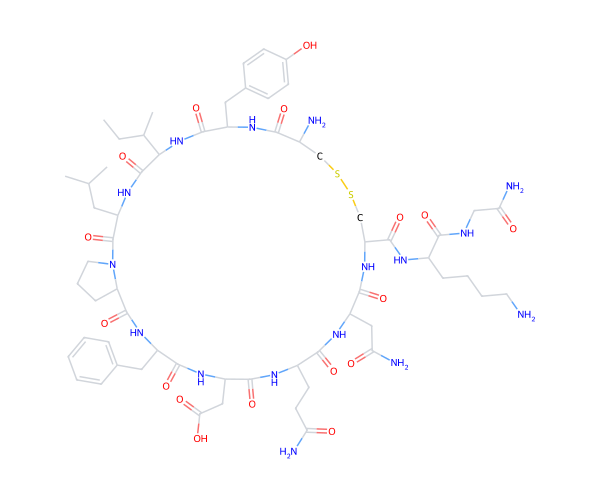
Oxytocin
OT • The Love Hormone • The Cuddle Hormone • The Bonding Hormone • The Trust/Bonding Pheromone
Overview
Oxytocin is fundamentally different from every other molecule in this wiki — it is a peptide hormone, not a steroid. Its inclusion is debated in the pheromone community. It was listed as HoP #16 "The Trust/Bonding Pheromone" and discussed extensively on PheroTruth (9+ pages), but many community members question whether it qualifies as a pheromone at all.
The Molecular Weight Problem: Oxytocin's molecular weight is 1007 Da — roughly 3x larger than typical pheromone steroids (~270-320 Da). This is the central point of contention. Steroid pheromones are small, lipophilic molecules that can be volatile and interact with VNO/olfactory receptors. Oxytocin is a large, water-soluble peptide that cannot be detected externally. Some community members argue this disqualifies it entirely; others argue it may still have pheromone-like effects through skin absorption or intranasal application.
Often called the "love hormone" or "cuddle hormone," oxytocin is released during intimate contact, breastfeeding, orgasm, and social bonding. It is produced in the hypothalamus and released by the posterior pituitary. Some pheromone users apply it intranasally alongside traditional pheromones, reportedly for trust-building effects — but the evidence that this works is unclear.
Chemistry: Not a Steroid
Oxytocin is a nonapeptide (9 amino acids):
Cys-Tyr-Ile-Gln-Asn-Cys-Pro-Leu-Gly-NH2
Features:
- Disulfide bridge between the two cysteines (creates ring)
- C-terminal amide
- Molecular weight: 1007 Da (much larger than steroids ~300 Da)
- Water-soluble peptide
This is NOT a steroid and cannot be synthesized from cholesterol like pheromones.
Mechanism of Action
Oxytocin Receptor
Oxytocin acts through its specific G-protein coupled receptor (OXTR):
- Found in brain, uterus, mammary tissue, heart
- Activates phospholipase C pathway
- Increases intracellular calcium
- Modulates social brain circuits
Brain Effects
Oxytocin modulates activity in:
- Amygdala - reduces fear response
- Nucleus accumbens - reward processing
- Prefrontal cortex - social cognition
- Hypothalamus - stress response
Effects
Social/Bonding Effects
- Increased trust in others
- Enhanced empathy and emotional recognition
- Stronger pair bonding
- Maternal behavior
- Group affiliation ("in-group" effects)
- Reduced social anxiety
Physiological Effects
- Uterine contractions (childbirth)
- Milk ejection (breastfeeding)
- Sexual arousal and orgasm
- Reduced cortisol/stress
- Cardiovascular effects
The Dark Side of Oxytocin
The PheroTruth community dedicated an entire thread to oxytocin's negative aspects ("Dark Side of Oxytocin," 2+ pages). Key findings discussed:
- Increases in-group favoritism -- oxytocin makes people more trusting of their "in-group" but can increase hostility or indifference toward out-groups
- Can enhance negative social memories -- not purely positive
- Context-dependent effects -- the effects depend heavily on the social context and the individual's existing emotional state
- Oxytocin blocks alcohol effects -- a separate PheroTruth thread discussed research showing oxytocin may counteract some effects of alcohol intoxication
- Potential link to Asperger's/autism research -- community members discussed oxytocin's role in social cognition disorders
Pheromone Relationship
The Debate: Is It a Pheromone?
Arguments against:
- Not volatile (1007 Da — far too large for airborne signaling)
- Not secreted externally in meaningful quantities
- Not detected by olfactory or VNO systems
- Works through internal signaling only
- Molecular weight is 3x that of steroid pheromones
Arguments for (from community proponents):
- Pheromones may trigger endogenous oxytocin release — androstadienone exposure may increase oxytocin in some studies
- Intranasal application bypasses the volatility issue
- The "bonding" and "crush" effects attributed to molecules like androstadienone may be mediated partly through oxytocin pathways
- Some users report trust-building effects when applied intranasally alongside pheromones
The community consensus leans toward oxytocin being a downstream mediator of pheromone effects rather than a pheromone itself. Its inclusion in the wiki reflects community interest and debate, not confirmed pheromone status.
Administration
Intranasal Oxytocin
Oxytocin sprays are available (prescription in some countries):
- Typical dose: 24-40 IU intranasally
- Effects within 30-60 minutes
- Duration: 2-4 hours
- Crosses blood-brain barrier (partially)
Natural Release
Oxytocin is released by:
- Physical touch (especially skin-to-skin)
- Hugging (20+ seconds optimal)
- Eye contact
- Orgasm
- Breastfeeding
- Social bonding activities
- Warm temperatures
Dosage Guidelines
| Level | Amount (Intranasal) |
|---|---|
| Light | 10-20 IU |
| Moderate | 24-40 IU |
| Strong | 40+ IU |
Notes:
- Prescription in many countries
- Effects are context-dependent
- Can enhance negative as well as positive social responses
- Not for solo use without understanding nuances
- Duration: 2-4 hours intranasally
Research Applications
Oxytocin is studied for:
- Autism spectrum disorders - social enhancement
- Social anxiety - trust and approach
- PTSD - fear extinction
- Couple therapy - bonding enhancement
- Depression - social motivation
Results are mixed and context-dependent.
Comparison to Pheromone Molecules
| Property | Steroids (Pheromones) | Oxytocin |
|---|---|---|
| Structure | C19-C21 steroids | 9-amino acid peptide |
| MW | ~270-320 Da | ~1007 Da |
| Volatile | Some | No |
| External signal | Yes | No |
| Internal signal | Yes | Yes |
| VNO detection | Yes | No |
| Receptor | GABAA, VNO, etc. | OXTR |
Community Consensus
Rating: 5/10
Oxytocin is well-documented in neuroscience as a bonding and trust hormone, and the 9+ page PheroTruth thread demonstrates genuine community interest. However, its status as a "pheromone" is actively debated. The molecular weight problem (1007 Da vs ~300 Da for steroids) is a real issue — it cannot function as an airborne chemical signal. Some users report effects from intranasal application alongside pheromones, but the evidence is anecdotal and unclear.
Strengths:
- Well-characterized bonding/trust mechanism (extensive scientific literature)
- Extensively discussed in the pheromone community (PheroTruth 9+ pages)
- May be a downstream mediator of pheromone bonding effects
- Intranasal application is a possible route for self-effects
Limitations:
- Not a pheromone by any traditional definition (too large, not volatile, not externally detected)
- Molecular weight debate is unresolved in the community
- Context-dependent — can amplify negative social dynamics (in-group bias, jealousy)
- Requires special administration (intranasal)
- Unclear whether intranasal OT actually enhances pheromone stacks in practice
- Prescription in many countries
Sources
Effects on Others
How Oxytocin is perceived by and affects those around you.
Primary Effects
- Enhances social approachability
Context Matters
- Effects depend on social setting
- Individual genetics affect perception
- Dose level significantly impacts response
- Your behavior must be congruent
Dosage Guidelines
Suggested dosing ranges. Start low — you can always add more.
| Level | Amount | Use Case |
|---|---|---|
| Light | 1-2 drops / 1 spray | Subtle effect, low risk of overdose |
| Moderate | 2-3 drops / 2 sprays | Noticeable effect, standard use |
| Strong | 3-5 drops / 3 sprays | Experienced users only |
Application Tips
Best Application Points
- Neck / behind ears
- Wrists
- Chest (under clothing)
- Forearms
Timing
- Apply 15-30 min before social interaction
- Reapply every 4-6 hours if needed
- Morning application works for all-day wear
Avoid
- Applying immediately before close contact
- Using strong cover scents that mask effect
- Applying to clothing (oils can stain)
Have experience with Oxytocin? Share your dosage notes in the Community tab.
Share Experience →Research Overview
Scientific studies and research related to Oxytocin. Search PubMed for CAS 50-56-6 for more studies.
Key Findings
Summary of important research findings related to Oxytocin.
Research Summary Coming Soon
We're compiling peer-reviewed research on Oxytocin. In the meantime, use the search links above to find published studies.
Want to contribute? If you know of relevant studies, share them in the Community tab.
Research Context
Detection Studies
Research on how humans detect this compound, including olfactory receptor studies and perception genetics (e.g., OR7D4 variants).
Learn about detection →Behavioral Studies
Studies examining behavioral and psychological effects of exposure, including mood, attraction, and social behavior changes.
Browse studies →Receptor Biology
Research on receptor binding, including GABA-A modulation, steroid receptor interactions, and neural signaling.
Learn about receptors →Know of relevant research?
Help us build the most comprehensive pheromone research database.
Share a Study →Products Containing Oxytocin
Commercial pheromone products that include Oxytocin in their formula.
No Products Listed Yet
We're still cataloging products containing Oxytocin. Check back soon or browse all vendors to find products manually.
Browse All Vendors →Buying Guide
Concentration Matters
Products vary widely in Oxytocin concentration. Higher isn't always better — check dosage guidelines on the Effects tab.
Formula Synergy
Oxytocin is often combined with other molecules. The overall formula balance affects the final effect more than any single ingredient.
Vendor Reputation
Stick to established vendors with verifiable lab testing. Check vendor pages for community reputation and reviews.
DIY Option
For experienced users, raw Oxytocin is available from some vendors.
Raw Materials
Raw pheromone molecules can be purchased and diluted in carrier oils (DPG, alcohol, etc.) for custom formulations.
Note: DIY requires precise measurement equipment and knowledge of safe concentrations. Start with pre-made products.
Know of a product containing Oxytocin?
Help us build the most complete product database.
Suggest a Product →No community experiences yet for Oxytocin.
Click anywhere on the wall to leave the first mark.