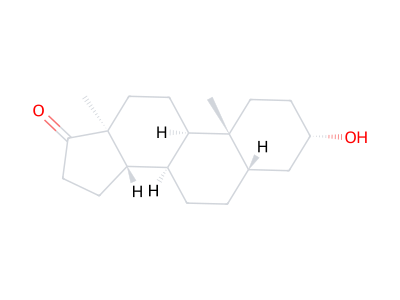
Androsterone
Rone • Erone • Alpha Androsterone • The Respect Pheromone • 3a-hydroxy-5a-androstan-17-one
C19H30O2 CAS: 53-41-8 290.44 g/mol
Overview
Androsterone (3a-hydroxy-5a-androstan-17-one), commonly called "Rone" or "Erone" in the community, is the "Respect Pheromone." It is an endogenous androstane steroid produced as a metabolite of testosterone and dihydrotestosterone. It was first isolated from male urine in 1931 and is secreted through sweat and sebaceous glands.
In the pheromone community, androsterone is considered a vital component in most mixes. It projects masculine presence, leadership, and trustworthiness without the intimidation factor of androstenone. Notably, older males produce more androsterone than younger counterparts, which may explain its association with perceived maturity, wisdom, and the "elder statesman" archetype.
Pharmacology
Biosynthesis
Androsterone is an endogenous androstane steroid produced in humans via the androgen metabolism pathway:
Cholesterol → Pregnenolone → DHEA → Androstenedione → Testosterone → DHT → Androsterone
                                                                          (via 3α-HSD)
The key enzyme is 3α-hydroxysteroid dehydrogenase (3α-HSD), which reduces dihydrotestosterone's 3-ketone to the 3α-hydroxyl group. Androsterone is excreted in urine primarily as a glucuronide conjugate and was the first human pheromone-candidate steroid isolated (Butenandt, 1931). It is secreted through apocrine sweat glands and sebaceous glands, with production increasing with age — older males produce significantly more than younger males.
GABAA Neurosteroid Activity
Androsterone is a positive allosteric modulator (PAM) of GABAA receptors. The critical structural features for this activity are:
- The 3α-hydroxyl group — this binds the neurosteroid binding site on the GABAA receptor (same site as allopregnanolone)
- The 5α-reduced A/B ring junction — creates the bent molecular geometry required for receptor binding
- The 17-ketone distinguishes it from other 3α,5α-neurosteroids like allopregnanolone (which has a 20-ketone on its pregnane sidechain)
At GABAA, androsterone potentiates chloride ion influx, producing anxiolytic, sedative, and anticonvulsant effects similar to (but weaker than) allopregnanolone. This is a real, pharmacologically validated mechanism — not speculative.
Mechanism of Action (Pheromone)
Androsterone works through two distinct pathways:
Pheromone Pathway (VNO): Detection via vomeronasal organ receptors. The VNO pumping mechanism allows detection despite androsterone's low volatility as a saturated androstane.
Neurosteroid Pathway (GABAA): Direct modulation of GABAA receptors in the brain, producing anxiolytic and mood-enhancing effects independent of olfactory detection. This dual-action is what makes androsterone unique — it affects both wearer and targets simultaneously through different mechanisms.
Unlike androstenone (which has the 16-ene double bond making it volatile), androsterone is a fully saturated androstane with no double bonds, meaning it is:
- Less volatile and longer-lasting
- Works via VNO mucus transport rather than airborne volatility
- Less consciously perceptible (subconscious detection)
- Effective duration approximately 4 hours based on community testing
Character
Moderate evidence · 18 poststhe respected captain
It projects a natural, non-threatening masculine authority that commands respect and draws people in.
- masculine, leader vibe
- VIP type attention
- respect and admiration
- highly individualistic hormonal indicator of human male reproductive fitness
- territory marker
Effect profile PheromoneXS GOALS
- calming5Content
- engaging4Excited
- statusprime8Optimistic
- social2nd6Friendly
- playful3Happy
- flirting5Courageous
- intimate2Loving
- sexual3Pleasurable
Where it sits
- BondingDominance
- IntrospectiveOutgoing
- ApproachableIntimidating
- Androgenic
- masculine
- Self-effect
- 6/10
- Timing
- day/night
Consistently described as delivering a masculine, leader vibe and representing male reproductive fitness.
Shadow.Overdosing can terrify people (especially when mixed with none) or cause severe headaches, and some report it smelling like urine.
Dose.Requires careful dosing; too much can cause an 'off' odor or physical discomfort, but when prepared well, it plays fantastically with other molecules.
Works on.Work settings, presentations, and social environments where leadership and respect are desired.
Backfires on.Environments where high anxiety or fear already exist, as cortisol can inhibit its positive association with arousal.
Stacks with.pregnenolone, Alpha Androstenol, Beta Androstenol, Androstadienone, Androstenone
In their words
I believe it could add to the masculine, leader vibe that Androsterone gives you.
Androsterone is a highly individualistic hormonal indicator of human male reproductive fitness.
These people have been my primary test subjects for the past 18 months and will suddenly know why they've been thinking I'm such hot shit, aside from the times they've been terrified of my none/Androsterone OD's.
Synthesised from archived PheroTruth threads. Every quote is verified verbatim against the post it cites. The archive holds roughly 29% of the forum's posts and over-represents opening posts, so read thin profiles with that in mind.
Community Effect Profile
Multi-dimensional effect ratings from community reports. The shaded area shows variance (standard deviation).
Moderate confidence
— 4 reports
Effects
Effects on Others (Targets)
- Respect and leadership perception: The wearer benefits from much more respect, being seen as a natural leader, reliable, and of higher social standing. People see the wearer as a trustworthy individual and may perceive them as higher social status than they actually are.
- "Fallout effect" (crush induction): One of the most important effects. Women develop crushes on the wearer -- acting more sweetly, especially those attracted to the "protector" male archetype. This is a strong romantic attraction effect, though not directly sexual.
- Clinginess and possessiveness in women: Women exposed to androsterone may start displaying signs of clinginess, jealousy, seeing the wearer as "special," and becoming much more possessive. This intensifies when there is "competition" for the wearer.
- Comfort and stress relief: Women feel comforted, protected, and safe. Many reports claim women feel uplifted and let go of stress and worry when around the wearer. Combined with other molecules, this easily steers toward romantic attraction.
- Amplification of other pheromones: Makes other pheromones in a mix work better and makes the overall pheromone signature more "believable." A key synergist.
- Leadership without arrogance: Projects leadership vibe without the fear-based respect that androstenone can produce.
Self-Effects
Androsterone is a positive allosteric modulator of GABAA receptors, meaning it has direct neurosteroid effects:
- Anxiolytic (anxiety-reducing) properties
- Mood stabilization and increased confidence
- Dramatically increased concentration and task orientation: Creates a sense of "get it done now," especially for business or work matters. This may relate to the perceived maturity boost.
- Enhanced focus and determination
Negative Effects
- Being seen as too serious (which is why androsterone should be combined with social molecules)
- Can come across as boring without social buffers
- May be confrontational to some males, though less so than androstenone
Dosage Guidelines
| Level | Amount |
|---|---|
| Light | 1-5 mcg |
| Moderate | 5-15 mcg |
| Strong | 15-30 mcg |
Notes:
- Relatively forgiving molecule compared to androstenone, but doses above 25 mcg would be considered very high.
- XSR37 is considered a superior buffer for androsterone compared to epiandrosterone (per community testing).
- Stacks well with nearly everything.
- Higher doses (15+ mcg) emphasize authority and seriousness over approachability.
- Best paired with androstenol or DHEA/DHEAS to add lightness and avoid seeming too serious.
Combinations
Recommended Stacks
- Androsterone + Androstenol: Authority with approachability -- "executive charm." 1:1 ratio works well for the balanced "friendly leader" effect.
- Androsterone + Androstenone: Full alpha presence -- 3:1 Rone:None ratio for social dominance without intimidation.
- Androsterone + Androstadienone: Romantic authority -- protector + romantic connection.
- Androsterone + Androstenone + Androstenol: The "big three" foundation for most pheromone mixes.
- 2x Neroli AMMO + Androstenone + Androsterone: Adds direction to social effects (from PT-A blend testing).
Notes
- Androsterone is used as a buffer/enhancer in virtually every commercial pheromone product.
- It makes your pheromone "signature" more believable and grounded.
- Without androsterone, aggressive molecules like androstenone can seem "floating" and incongruent.
Application Tips
Best Application Points
- Neck / behind ears
- Wrists
- Chest (under clothing)
- Forearms
Timing
- Apply 15-30 min before social interaction
- Reapply every 4-6 hours if needed
- Morning application works for all-day wear
Avoid
- Applying immediately before close contact
- Using strong cover scents that mask effect
- Applying to clothing (oils can stain)
Have experience with Androsterone? Share your dosage notes in the Community tab.
Share Experience →Research Overview
Scientific studies and research related to Androsterone. Search PubMed for CAS 53-41-8 for more studies.
Related Articles on Pheromaxxing
Guides, science articles, and techniques that discuss Androsterone.
Stacking Principles: Combining Pheromones Effectively
GABA-A Receptor Modulation by Neurosteroids
How Pheromones Affect Stress: Cortisol and the HPA Axis
Olfactory vs VNO: Parallel Detection Pathways
Androstane Nomenclature and Stereochemistry
Outcome Independence: Detachment From Results
Pheromone Stacking: The Complete Ratios Guide
Understanding and Leveraging Social Proof
Approach Strategies: Real-World Application
Key Findings
Summary of important research findings related to Androsterone.
Research Summary Coming Soon
We're compiling peer-reviewed research on Androsterone. In the meantime, use the search links above to find published studies.
Want to contribute? If you know of relevant studies, share them in the Community tab.
Research Context
Detection Studies
Research on how humans detect this compound, including olfactory receptor studies and perception genetics (e.g., OR7D4 variants).
Learn about detection →Behavioral Studies
Studies examining behavioral and psychological effects of exposure, including mood, attraction, and social behavior changes.
Browse studies →Receptor Biology
Research on receptor binding, including GABA-A modulation, steroid receptor interactions, and neural signaling.
Learn about receptors →Know of relevant research?
Help us build the most comprehensive pheromone research database.
Share a Study →Products Containing Androsterone
Commercial pheromone products that include Androsterone in their formula.
Buying Guide
Concentration Matters
Products vary widely in Androsterone concentration. Higher isn't always better — check dosage guidelines on the Effects tab.
Formula Synergy
Androsterone is often combined with other molecules. The overall formula balance affects the final effect more than any single ingredient.
Vendor Reputation
Stick to established vendors with verifiable lab testing. Check vendor pages for community reputation and reviews.
DIY Option
For experienced users, raw Androsterone is available from some vendors.
Raw Materials
Raw pheromone molecules can be purchased and diluted in carrier oils (DPG, alcohol, etc.) for custom formulations.
Note: DIY requires precise measurement equipment and knowledge of safe concentrations. Start with pre-made products.
Know of a product containing Androsterone?
Help us build the most complete product database.
Suggest a Product →No community experiences yet for Androsterone.
Click anywhere on the wall to leave the first mark.
click anywhere to leave a mark