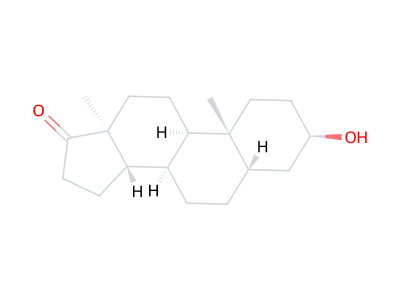
Epiandrosterone
Beta-Androsterone • b-Rone • Epi-Androsterone • The Charmer/Swag Pheromone • 3b-Hydroxy-5a-androstan-17-one • iso-Androsterone
C19H30O2 CAS: 481-29-8 290.44 g/mol
Overview
Epiandrosterone (3b-hydroxy-5a-androstan-17-one), also known as beta-androsterone or "b-Rone", is the 3b-epimer of alpha-androsterone and is commonly called "The Charmer" or "Swag Pheromone." It is a metabolite of the most abundant adrenal androgenic steroid DHEA in young adult humans.
While it is the same molecular formula as alpha-androsterone, the beta (3b) orientation of the hydroxyl group creates dramatically different pheromone effects. Where alpha-androsterone projects authority and respect, epiandrosterone creates likability, social acceptance, and a charming "awe" effect. It is a powerful social pheromone rather than a status/authority molecule.
Pharmacology
What It Is
Epiandrosterone (3β-hydroxy-5α-androstan-17-one) is the 3β-epimer of androsterone — identical molecular formula (C₁₉H₃₀O₂, MW 290.44) but with the hydroxyl group pointing in the opposite direction (β instead of α at C-3). This single stereochemical difference — the orientation of one -OH group — creates dramatically different pheromone effects. Also known as iso-androsterone.
Biosynthesis
Epiandrosterone is an endogenous steroid produced as a metabolite of DHEA (dehydroepiandrosterone), the most abundant adrenal androgen in young adults:
DHEA → Androstenediol → Testosterone → DHT → Epiandrosterone (via 3β-HSD)
It is present in human sweat and body fluids. Levels correlate with DHEA production, which peaks in the 20s — potentially explaining why epiandrosterone's "boyfriend" effect resonates most with younger women.
Detection
Detected via VNO (vomeronasal organ). As a fully saturated androstane, it has low volatility and works primarily through close-range contact. The 3β-hydroxyl orientation is the critical structural feature — it causes VNO receptors to interpret the signal differently from 3α-androsterone, producing social charm instead of authority/respect.
Effects
Effects on Others (Targets)
- Social acceptance and likability: People see you as easy to get along with. Enhances social acceptance and fluidity, and brightens the mood of people around you.
- "Awe" effect: Creates a sense of awe around the wearer. You may get amazed looks from both men and women. Women in particular seem much more "magnetized" by its presence than men.
- Positive outlook induction: The wearer and people exposed tend to see things in a more positive light, even when there are reasons to be negative or in a bad mood.
- "Boyfriend" vibe with younger women: Produces a fun, approachable boyfriend vibe that is especially attractive to younger women ages 18-20s. Older women tend to be more attracted to men with higher alpha-androsterone levels.
- Can be perceived as feminine: At low doses (up to 15 mcg), epiandrosterone can read as feminine. Men may perceive you as "weak" and act strangely if you use too much. This is why it is typically used as an amplifier in mixes rather than a core standalone molecule.
Dose-Dependent Masculinity Shift
A distinctive property of epiandrosterone: at low doses (up to ~15 mcg) it reads as more feminine, but at higher doses it shifts to reading as MORE masculine, similar to its alpha counterpart. This dose-dependent gender perception shift is unusual among pheromone molecules.
Self-Effects
- Increased feeling of wellbeing
- Sense of being socially well-accepted
- Less restraint when speaking -- more outspoken and charismatic
- Binds to GABAA receptors (confirmed neurosteroid activity)
Dosage Guidelines
| Level | Amount |
|---|---|
| Light | 2-10 mcg |
| Moderate | 10-20 mcg |
| Strong | 20-40 mcg |
Notes:
- Below 15 mcg reads as feminine; above 15 mcg shifts to masculine.
- Best used as an amplifier/modifier in mixes rather than standalone.
- Stacks well with alpha-androsterone, androstenol, and androstadienone.
- Not recommended as a standalone for men in male-heavy environments (may read as weak).
Combinations
Recommended Stacks
- Xist (PheromoneXS): Epiandrosterone is a core ingredient, producing the "boyfriend" vibe.
- Epiandrosterone + Alpha-Androsterone: Charm balanced with authority.
- Epiandrosterone + Androstenol: Maximum social charm and friendliness.
- As a mix amplifier: Used to make the overall mix more likable and socially accepted.
Notes
- XSR37 is considered a superior buffer for alpha-androsterone compared to epiandrosterone in the community.
- Works best when not the dominant molecule -- use as a flavor/modifier in combinations.
Application Tips
Best Application Points
- Neck / behind ears
- Wrists
- Chest (under clothing)
- Forearms
Timing
- Apply 15-30 min before social interaction
- Reapply every 4-6 hours if needed
- Morning application works for all-day wear
Avoid
- Applying immediately before close contact
- Using strong cover scents that mask effect
- Applying to clothing (oils can stain)
Have experience with Epiandrosterone? Share your dosage notes in the Community tab.
Share Experience →Research Overview
Scientific studies and research related to Epiandrosterone. Search PubMed for CAS 481-29-8 for more studies.
Related Articles on Pheromaxxing
Guides, science articles, and techniques that discuss Epiandrosterone.
Key Findings
Summary of important research findings related to Epiandrosterone.
Research Summary Coming Soon
We're compiling peer-reviewed research on Epiandrosterone. In the meantime, use the search links above to find published studies.
Want to contribute? If you know of relevant studies, share them in the Community tab.
Research Context
Detection Studies
Research on how humans detect this compound, including olfactory receptor studies and perception genetics (e.g., OR7D4 variants).
Learn about detection →Behavioral Studies
Studies examining behavioral and psychological effects of exposure, including mood, attraction, and social behavior changes.
Browse studies →Receptor Biology
Research on receptor binding, including GABA-A modulation, steroid receptor interactions, and neural signaling.
Learn about receptors →Know of relevant research?
Help us build the most comprehensive pheromone research database.
Share a Study →Products Containing Epiandrosterone
Commercial pheromone products that include Epiandrosterone in their formula.
Buying Guide
Concentration Matters
Products vary widely in Epiandrosterone concentration. Higher isn't always better — check dosage guidelines on the Effects tab.
Formula Synergy
Epiandrosterone is often combined with other molecules. The overall formula balance affects the final effect more than any single ingredient.
Vendor Reputation
Stick to established vendors with verifiable lab testing. Check vendor pages for community reputation and reviews.
DIY Option
For experienced users, raw Epiandrosterone is available from some vendors.
Raw Materials
Raw pheromone molecules can be purchased and diluted in carrier oils (DPG, alcohol, etc.) for custom formulations.
Note: DIY requires precise measurement equipment and knowledge of safe concentrations. Start with pre-made products.
Know of a product containing Epiandrosterone?
Help us build the most complete product database.
Suggest a Product →No community experiences yet for Epiandrosterone.
Click anywhere on the wall to leave the first mark.
click anywhere to leave a mark