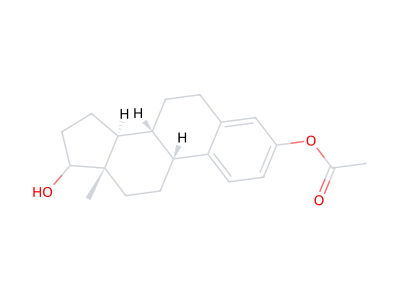
Estratetraenol Acetate
estratetraenyl acetate • EST acetate • estra-1,3,5(10),16-tetraen-3-yl acetate
Pharmacology
What It Is
Estratetraenol acetate (C₂₀H₂₄O₂, MW 296.4) is the acetate ester prodrug of estratetraenol. The 3-hydroxyl group is esterified with acetic acid, creating a compound that is hydrolyzed by skin esterases to release free estratetraenol over time. Non-estrogenic (retains the C16=C17 double bond). CAS number not documented in major databases.
Overview
Estratetraenol acetate is an acetylated derivative of estratetraenol (EST), created by esterifying the 3-hydroxyl group with acetic acid. This modification creates a prodrug — a compound that is converted by the body's enzymes (esterases) back into the active parent compound, estratetraenol.
Unlike methoxyestratetraenol (MEO-EST), which is a stable methyl ether that doesn't convert back to EST, the acetate ester is designed to be cleaved, releasing free estratetraenol over time. This may provide a depot or slow-release effect, potentially extending the duration of estratetraenol's effects.
The compound retains the 16-position double bond characteristic of human estratetraenes, meaning it has NO estrogenic activity (despite being estrogen-derived).
Chemical Notes
Ester Hydrolysis: The acetate ester is cleaved by esterases (enzymes found in skin, blood, and tissues):
Estratetraenol-3-acetate + H₂O → Estratetraenol + Acetic acid
This occurs relatively quickly (minutes to hours), making it a true prodrug rather than a separate active compound.
Improved Properties:
- Loss of H-bonding ability (before hydrolysis) may improve skin penetration
- Slightly more volatile than free EST
- More stable in formulations
- Better shelf life
Important Distinction: This is NOT a ketone (estratetraenone) - the 16-position double bond prevents a 17-ketone from existing. The acetate is at position 3 (the phenolic OH), not position 17.
Effects
Primary Effects (via EST release):
- Comfort and nurturing atmosphere
- Non-sexual warmth and care
- Reduced social tension
- Maternal/caring vibe
Prodrug-Specific Benefits:
- Potentially longer duration than free EST
- Slower onset, extended release
- May provide more stable blood/tissue levels
- Better volatility than free EST (due to loss of H-bonding before hydrolysis)
Receptor Activity:
- Acts through vomeronasal organ (VNO) after conversion
- No estrogenic effects (no 17β-OH group)
- Processed as estratetraenol after ester cleavage
Social Context:
- Best for non-sexual, nurturing contexts
- May reduce sexual tension
- Good for maternal, caring roles
- Professional contexts requiring warmth
Dosage Guidelines
- Light: 30-60 mcg
- Moderate: 60-100 mcg
- Strong: 100-150 mcg
Duration:
- Extended due to prodrug effect: 6-8+ hours
- Slower onset (15-30 min for esterase cleavage)
- More sustained release than free EST
- Best in oil carriers to slow absorption further
Best Practices:
- Allow time for conversion to active EST
- Not ideal for situations requiring immediate effects
- Good for all-day wear scenarios
- May work better than free EST for extended events
- Consider using in sustained-release blends
Application Tips
Best Application Points
- Neck / behind ears
- Wrists
- Chest (under clothing)
- Forearms
Timing
- Apply 15-30 min before social interaction
- Reapply every 4-6 hours if needed
- Morning application works for all-day wear
Avoid
- Applying immediately before close contact
- Using strong cover scents that mask effect
- Applying to clothing (oils can stain)
Have experience with Estratetraenol Acetate? Share your dosage notes in the Community tab.
Share Experience →Research Overview
Scientific studies and research related to Estratetraenol Acetate. Search PubMed for CAS unknown for more studies.
Key Findings
Summary of important research findings related to Estratetraenol Acetate.
Research Summary Coming Soon
We're compiling peer-reviewed research on Estratetraenol Acetate. In the meantime, use the search links above to find published studies.
Want to contribute? If you know of relevant studies, share them in the Community tab.
Research Context
Detection Studies
Research on how humans detect this compound, including olfactory receptor studies and perception genetics (e.g., OR7D4 variants).
Learn about detection →Behavioral Studies
Studies examining behavioral and psychological effects of exposure, including mood, attraction, and social behavior changes.
Browse studies →Receptor Biology
Research on receptor binding, including GABA-A modulation, steroid receptor interactions, and neural signaling.
Learn about receptors →Know of relevant research?
Help us build the most comprehensive pheromone research database.
Share a Study →Products Containing Estratetraenol Acetate
Commercial pheromone products that include Estratetraenol Acetate in their formula.
No Products Listed Yet
We're still cataloging products containing Estratetraenol Acetate. Check back soon or browse all vendors to find products manually.
Browse All Vendors →Buying Guide
Concentration Matters
Products vary widely in Estratetraenol Acetate concentration. Higher isn't always better — check dosage guidelines on the Effects tab.
Formula Synergy
Estratetraenol Acetate is often combined with other molecules. The overall formula balance affects the final effect more than any single ingredient.
Vendor Reputation
Stick to established vendors with verifiable lab testing. Check vendor pages for community reputation and reviews.
DIY Option
For experienced users, raw Estratetraenol Acetate is available from some vendors.
Raw Materials
Raw pheromone molecules can be purchased and diluted in carrier oils (DPG, alcohol, etc.) for custom formulations.
Note: DIY requires precise measurement equipment and knowledge of safe concentrations. Start with pre-made products.
Know of a product containing Estratetraenol Acetate?
Help us build the most complete product database.
Suggest a Product →No community experiences yet for Estratetraenol Acetate.
Click anywhere on the wall to leave the first mark.