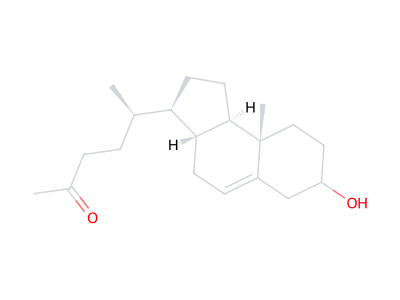
Pregnenolone
Neno • Nenolone • Preg • P5 • The Charmer/Hilarity Pheromone • 3b-hydroxypregn-5-en-20-one
C21H32O2 CAS: 145-13-1 316.48 g/mol
Overview
Pregnenolone (3b-hydroxypregn-5-en-20-one), commonly called "Neno" or "Nenolone" in the community, is both the "Charmer/Hilarity Pheromone" and the "mother hormone" -- the precursor from which all other steroid hormones are synthesized.
Pregnenolone is not a "mainstream" pheromone molecule in the traditional sense. It was uncovered by pheromone enthusiasts who were surprised to find that "neno" worked in a similar fashion as a pheromone as it did as a supplement. It is an active neurosteroid, and community testing revealed that it behaves surprisingly well as a topically-applied pheromone despite originally being known only as a supplement and hormone precursor.
As a pheromone, it creates intense magnetism, extreme mood elevation, giddiness, and hilarity. As the mother hormone, it converts readily into other sexual/androgenic hormones, and it behaves in a surprisingly similar way as a pheromone -- people see you as someone healthy, fertile, youthful, and attractive.
Pharmacology
What It Is
Pregnenolone (3β-hydroxypregn-5-en-20-one) is a C21 pregnane steroid and the "mother hormone" — the first steroid synthesized from cholesterol, and the precursor from which ALL other steroid hormones are derived. Molecular formula C₂₁H₃₂O₂, MW 316.48. It has a 5-ene double bond (B ring) and a 3β-hydroxyl group.
Biosynthesis
Pregnenolone sits at the very top of the steroid biosynthesis cascade:
Cholesterol
    ↓ (CYP11A1 / cholesterol side-chain cleavage)
Pregnenolone → DHEA → Androstenedione → Testosterone → DHT
    ↓                                                    ↓
Progesterone → Cortisol                           Androstenone, Androsterone, etc.
    ↓
Allopregnanolone, THDOC
Every steroid pheromone in this wiki is a downstream metabolite of pregnenolone. It is produced in the adrenal cortex, gonads, and brain (neurosteroid synthesis). Levels peak in the 20s and decline with age.
Receptor Activity
Pregnenolone is an active neurosteroid working through multiple receptor systems:
GABAA Antagonism:
- Negative modulator of GABAA receptors (opposite of allopregnanolone)
- Results in increased alertness and cognitive function
- Anti-sedative effects — explains the "energy" rather than calming
NMDA Enhancement:
- Positive modulator of NMDA receptors
- Enhances glutamatergic transmission
- Improves learning and memory
Sigma-1 Receptor:
- Binds to sigma-1 receptors
- Neuroprotective effects and mood stabilization
Character
Moderate evidence · 22 poststhe carefree catalyst
Wearing pregnenolone is like wrapping yourself and the room in a warm, carefree bubble of giddy optimism, where worries slide off and conversations flow with a slightly silly, uninhibited ease.
- giddy
- verbal disconnect
- like I've sprayed shine right in my face
- cheerful
- approachable
- deep and sensual
- detachment
- light Viagra effect
Effect profile PheromoneXS GOALS
- calming4Content
- engaging6Excited
- status3Optimistic
- social2nd8Friendly
- playfulprime9Happy
- flirting6Courageous
- intimate5Loving
- sexual3Pleasurable
Where it sits
- BondingDominance
- IntrospectiveOutgoing
- ApproachableIntimidating
- Androgenic
- neutral
- Self-effect
- 8/10
- Timing
- day/night
- Duration
- 4 to 8 hours, with a potential crash or fatigue later in the day
Highly neutral and versatile, noted as an excellent candidate for both sexes with no distinct masculine edge compared to DHEA-S.
Shadow.At high doses (above 30-50mcg), it causes a pronounced verbal disconnect where the brain and vocal cords misalign, leading to slurred, 'drunk-like' speech, emotional sensitivity/nervousness, or sudden sedation/crashing.
Dose.Steep but forgiving up to 30mcg, after which it hits a cliff of verbal impairment, emotional sensitivity, or sedation.
Works on.Social gatherings, casual interactions, and settings where people need to let their guard down and have fun.
Backfires on.Strange or highly stressful situations where emotional stability and precise verbal communication are required.
Stacks with.Androsterone (for a VIP, 'Instant Gentleman' vibe), Androstenone (for a happy, fun combination), Alpha Androstenol (for a 'dynamic duo' of extreme friendliness and visibility)
In their words
I also had some issues where my brain and my vocal cords weren't on the same wavelength. I found that at this dose I started having some issues where I was thinking one thing but my mouth would say something completely different. It was as if their was a disconnect there.
WOW! Big difference Excited, gigged, I feel heart pounding, Motivated I feel like I've sprayed shine right in my face
Women get a better mood, reacts much better on jokes and like Beta Androstenol they tell me very deep things.
Synthesised from archived PheroTruth threads. Every quote is verified verbatim against the post it cites. The archive holds roughly 29% of the forum's posts and over-represents opening posts, so read thin profiles with that in mind.
Community Effect Profile
Multi-dimensional effect ratings from community reports. The shaded area shows variance (standard deviation).
Moderate confidence
— 4 reports
Effects
Pheromone Effects on Others (Targets)
- Intense magnetism: People feel magnetized to your presence and see you as charming.
- VERY strong mood elevation: Both wearer and targets experience significant mood uplift. Eliminates negative feelings and makes people interpret things in a positive light.
- Hilarity and silliness: Can make negative situations "hilariously" funny. HoP founder Joe Masters described how pregnenolone turned an annoying workplace situation into a fit of laughter for everyone present. This is a common and consistent effect.
- "Tipsy" feeling: In higher doses, can feel like you have had a few drinks. Playful, silly, less restraint about what you say and how you act around others.
- Youthful/attractive perception: People see you as someone healthy and fertile, and therefore more youthful and attractive.
- Giddiness: More playful and silly behavior from both wearer and those exposed.
Self-Effects
- Extreme mood elevation and giddiness
- Less restraint in speech and behavior
- Feels "tipsy" without alcohol
- Enhanced cognitive function at lower doses
- Memory and learning enhancement (NMDA pathway)
- Neuroprotective effects
Negative / Caution Effects
- Verbal disconnect at high doses (above 20 mcg): More trouble putting thoughts into words, becoming less articulate. "Scatterbrained" feeling from too many exciting thoughts at once. This is a significant limitation.
- Erratic and unpredictable: Different doses affect different people in very distinct ways. This is one of the most individually variable molecules.
- Does not mix well with alpha molecules: Pregnenolone does not mix well with "alpha" pheromone molecules like androstenone and androsterone. Creates more "stress" mentally and makes mixes unstable. Not everyone notices this, but it is a common report.
- Not recommended for work environments: The giddiness and reduced articulation make this unsuitable for professional settings or operating machinery.
- Described as a "shallow" molecule: Some community members describe pregnenolone (along with DHEA and DHEAS) as "shallow" molecules that reduce perceived status.
Dosage Guidelines
| Level | Amount (topical as pheromone) |
|---|---|
| Light | 5-10 mcg |
| Moderate | 10-20 mcg |
| Strong | 20-40 mcg |
Critical note: Above 20 mcg, many users experience the verbal disconnect and scatterbrained effect. Stay at or below 20 mcg for best pheromone results.
As an oral supplement:
| Level | Amount |
|---|---|
| Light | 5-25 mg |
| Moderate | 25-50 mg |
| Strong | 75-100 mg |
Notes:
- Effects peak within 1-2 hours (oral supplement)
- Duration: 4-8 hours
- Converts to downstream hormones over time
- Test individually -- effects are highly variable between people
Combinations
Recommended
- Works well with social molecules (androstenol) for maximum hilarity/fun
- Can enhance mood in blends that need a "fun" element
Avoid
- Androstenone + Pregnenolone: Creates mental stress and instability in many users
- Androsterone + Pregnenolone: Same conflict with alpha molecules
- High-dose pregnenolone in any mix -- verbal disconnect undermines other pheromone effects
Application Tips
Best Application Points
- Neck / behind ears
- Wrists
- Chest (under clothing)
- Forearms
Timing
- Apply 15-30 min before social interaction
- Reapply every 4-6 hours if needed
- Morning application works for all-day wear
Avoid
- Applying immediately before close contact
- Using strong cover scents that mask effect
- Applying to clothing (oils can stain)
Have experience with Pregnenolone? Share your dosage notes in the Community tab.
Share Experience →Research Overview
Scientific studies and research related to Pregnenolone. Search PubMed for CAS 145-13-1 for more studies.
Related Articles on Pheromaxxing
Guides, science articles, and techniques that discuss Pregnenolone.
Key Findings
Summary of important research findings related to Pregnenolone.
Research Summary Coming Soon
We're compiling peer-reviewed research on Pregnenolone. In the meantime, use the search links above to find published studies.
Want to contribute? If you know of relevant studies, share them in the Community tab.
Research Context
Detection Studies
Research on how humans detect this compound, including olfactory receptor studies and perception genetics (e.g., OR7D4 variants).
Learn about detection →Behavioral Studies
Studies examining behavioral and psychological effects of exposure, including mood, attraction, and social behavior changes.
Browse studies →Receptor Biology
Research on receptor binding, including GABA-A modulation, steroid receptor interactions, and neural signaling.
Learn about receptors →Know of relevant research?
Help us build the most comprehensive pheromone research database.
Share a Study →Products Containing Pregnenolone
Commercial pheromone products that include Pregnenolone in their formula.
No Products Listed Yet
We're still cataloging products containing Pregnenolone. Check back soon or browse all vendors to find products manually.
Browse All Vendors →Buying Guide
Concentration Matters
Products vary widely in Pregnenolone concentration. Higher isn't always better — check dosage guidelines on the Effects tab.
Formula Synergy
Pregnenolone is often combined with other molecules. The overall formula balance affects the final effect more than any single ingredient.
Vendor Reputation
Stick to established vendors with verifiable lab testing. Check vendor pages for community reputation and reviews.
DIY Option
For experienced users, raw Pregnenolone is available from some vendors.
Raw Materials
Raw pheromone molecules can be purchased and diluted in carrier oils (DPG, alcohol, etc.) for custom formulations.
Note: DIY requires precise measurement equipment and knowledge of safe concentrations. Start with pre-made products.
Know of a product containing Pregnenolone?
Help us build the most complete product database.
Suggest a Product →No community experiences yet for Pregnenolone.
Click anywhere on the wall to leave the first mark.
click anywhere to leave a mark