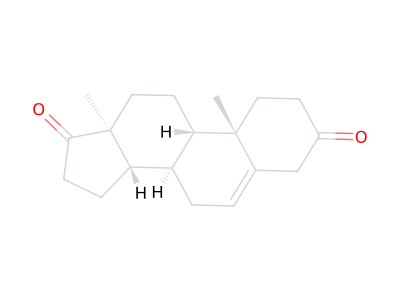
DHEA
Dehydroepiandrosterone • Dehydroisoandrosterone
C19H28O2 CAS: 53-43-0 288.42 g/mol
Overview
DHEA (dehydroepiandrosterone) is a naturally occurring steroid hormone produced primarily by the adrenal glands. It serves as a crucial precursor in the biosynthesis of both androgens (testosterone, DHT) and estrogens (estradiol), sitting at a key metabolic crossroads.
In the pheromone community, DHEA is known as the "youthful, funny pheromone" - creating humorous social situations, playfulness, and mood elevation. It's valued as a rounding ingredient in male-status mixes and for its synergy with molecules like androstenetrione.
DHEA levels naturally decline with age after peaking in the 20s, which links it to youthfulness signaling.
Pharmacology
What It Is
DHEA (dehydroepiandrosterone, 3β-hydroxy-androst-5-en-17-one) is the most abundant steroid hormone precursor in the human body. Molecular formula C₁₉H₂₈O₂, MW 288.42. It has a 5-ene double bond (in the B ring, not the 16-position like androstenone) and a 3β-hydroxyl group.
Biosynthesis
DHEA occupies a central position in human steroid biosynthesis — it is the master precursor from which most sex hormones are derived:
Cholesterol → Pregnenolone → DHEA → Androstenediol → Testosterone → DHT
                                  → Androstenedione → Estrone → Estradiol
Produced primarily by the adrenal cortex (zona reticularis). DHEA levels peak in the mid-20s and decline steadily with age — by age 70, levels are 10-20% of peak values. This age-related decline is why DHEA is associated with youthfulness signaling.
Detection & Mechanism
- Not a classical VNO pheromone — the 5-ene double bond is in the wrong position for typical pheromone volatility
- Works primarily through precursor conversion — skin enzymes (3β-HSD, 17β-HSD, aromatase) convert topical DHEA into androstenedione, testosterone, and estradiol locally
- Also available as an oral supplement (25-50 mg daily) to support natural pheromone production systemically
Character
Moderate evidence · 20 poststhe volatile youth booster
A double-edged precursor that injects raw, energetic virility and mood-brightening confidence, but risks slipping into a shallow, immature vibe if over-applied.
- freaking powerful
- narcistic quality
- superior alphaness
- freshness, virility
- status-reducing, shallow
- immature vibe
- energizing
Effect profile PheromoneXS GOALS
- calming2Content
- engaging5Excited
- statusprime6Optimistic
- social4Friendly
- playful2nd5Happy
- flirting4Courageous
- intimate0Loving
- sexual3Pleasurable
Where it sits
- BondingDominance
- IntrospectiveOutgoing
- ApproachableIntimidating
- Androgenic
- contested
- Self-effect
- 7/10
- Timing
- day
- Duration
- unclear; users query if it requires frequent refreshing
While utilized in heavy male status mixes for virility, it is also actively recommended as a prime candidate for female single-molecule testing.
Shadow.At high doses, it can cause severe self-effects like making the wearer feel tired and shitty, while socially projecting a shallow, status-reduced, and immature vibe.
Dose.Highly dose-sensitive: a moderate dose provides virility and mood enhancement, but high doses quickly degrade into fatigue and an immature social signature.
Works on.Male status mixes looking for a buffer, workouts, and standalone mood enhancement.
Backfires on.Situations requiring deep maturity or fallout recovery, where its potential to project an immature or shallow vibe can backfire.
Stacks with.Androstenone (to tame aggression), A314 (to buffer and add freshness), Androstadienone (in attraction mixes)
In their words
DHEA is freaking powerful bro. Getting some more ASAP. None has always been pretty interesting, leaves an imprint.
On the negative side, it is described as status-reducing, shallow and giving off an immature vibe. This, as well as the positive effects, is of course dosage-dependent...
50 -100mcg and above of DHEA dilution may have very agreeable, nootropic self effects, or it will make you tired and feel shitty -that's right, it can go both ways.
Synthesised from archived PheroTruth threads. Every quote is verified verbatim against the post it cites. The archive holds roughly 29% of the forum's posts and over-represents opening posts, so read thin profiles with that in mind.
Community Effect Profile
Multi-dimensional effect ratings from community reports. The shaded area shows variance (standard deviation).
Moderate confidence
— 3 reports
Effects
Social Effects
- Creates humorous social situations and more playfulness
- Boosts well-being and makes people feel more "in touch" physically
- Rounds out male-status mixes
- Can have a "narcistic quality" in certain blends
Self-Effects
- Mood enhancement and visual brightening
- Nootropic effects
- GABA-A receptor antagonist activity
- Performance enhancement
- ER-beta preferential receptor activity
Cautions
- Can be status-reducing at wrong doses (biphasic response)
- May feel "shallow" or immature at high doses
- Can buffer or attenuate effects of other molecules if overdosed
Dosage Guidelines
| Level | Amount |
|---|---|
| Light | 5-15 mcg |
| Moderate | 15-30 mcg |
| Strong | 30-60 mcg |
Notes:
- Effects are biphasic - too much can flip from positive to negative
- Can also be taken orally (25-50 mg daily) to support natural pheromone production
- Available from supplement companies as powder, capsules, or liquid (1.2 mg/drop)
Combinations
Recommended Stacks
- DHEA + Androstenetrione: Synergistic pairing that conveys strong immunohealth with a male aura
- DHEA + Androsterone: Rounds out the authority effect
- DHEA + Androstenol: Youthful playfulness with social warmth
Notes on Interactions
- May hinder "fallout" (crush development) at moderate doses
- 7-Keto DHEA theorized to provide DHEA benefits without this fallout interference
Application Tips
Best Application Points
- Neck / behind ears
- Wrists
- Chest (under clothing)
- Forearms
Timing
- Apply 15-30 min before social interaction
- Reapply every 4-6 hours if needed
- Morning application works for all-day wear
Avoid
- Applying immediately before close contact
- Using strong cover scents that mask effect
- Applying to clothing (oils can stain)
Have experience with DHEA? Share your dosage notes in the Community tab.
Share Experience →Research Overview
Scientific studies and research related to DHEA. Search PubMed for CAS 53-43-0 for more studies.
Related Articles on Pheromaxxing
Guides, science articles, and techniques that discuss DHEA.
Key Findings
Summary of important research findings related to DHEA.
Research Summary Coming Soon
We're compiling peer-reviewed research on DHEA. In the meantime, use the search links above to find published studies.
Want to contribute? If you know of relevant studies, share them in the Community tab.
Research Context
Detection Studies
Research on how humans detect this compound, including olfactory receptor studies and perception genetics (e.g., OR7D4 variants).
Learn about detection →Behavioral Studies
Studies examining behavioral and psychological effects of exposure, including mood, attraction, and social behavior changes.
Browse studies →Receptor Biology
Research on receptor binding, including GABA-A modulation, steroid receptor interactions, and neural signaling.
Learn about receptors →Know of relevant research?
Help us build the most comprehensive pheromone research database.
Share a Study →Products Containing DHEA
Commercial pheromone products that include DHEA in their formula.
No Products Listed Yet
We're still cataloging products containing DHEA. Check back soon or browse all vendors to find products manually.
Browse All Vendors →Buying Guide
Concentration Matters
Products vary widely in DHEA concentration. Higher isn't always better — check dosage guidelines on the Effects tab.
Formula Synergy
DHEA is often combined with other molecules. The overall formula balance affects the final effect more than any single ingredient.
Vendor Reputation
Stick to established vendors with verifiable lab testing. Check vendor pages for community reputation and reviews.
DIY Option
For experienced users, raw DHEA is available from some vendors.
Raw Materials
Raw pheromone molecules can be purchased and diluted in carrier oils (DPG, alcohol, etc.) for custom formulations.
Note: DIY requires precise measurement equipment and knowledge of safe concentrations. Start with pre-made products.
Know of a product containing DHEA?
Help us build the most complete product database.
Suggest a Product →No community experiences yet for DHEA.
Click anywhere on the wall to leave the first mark.
click anywhere to leave a mark